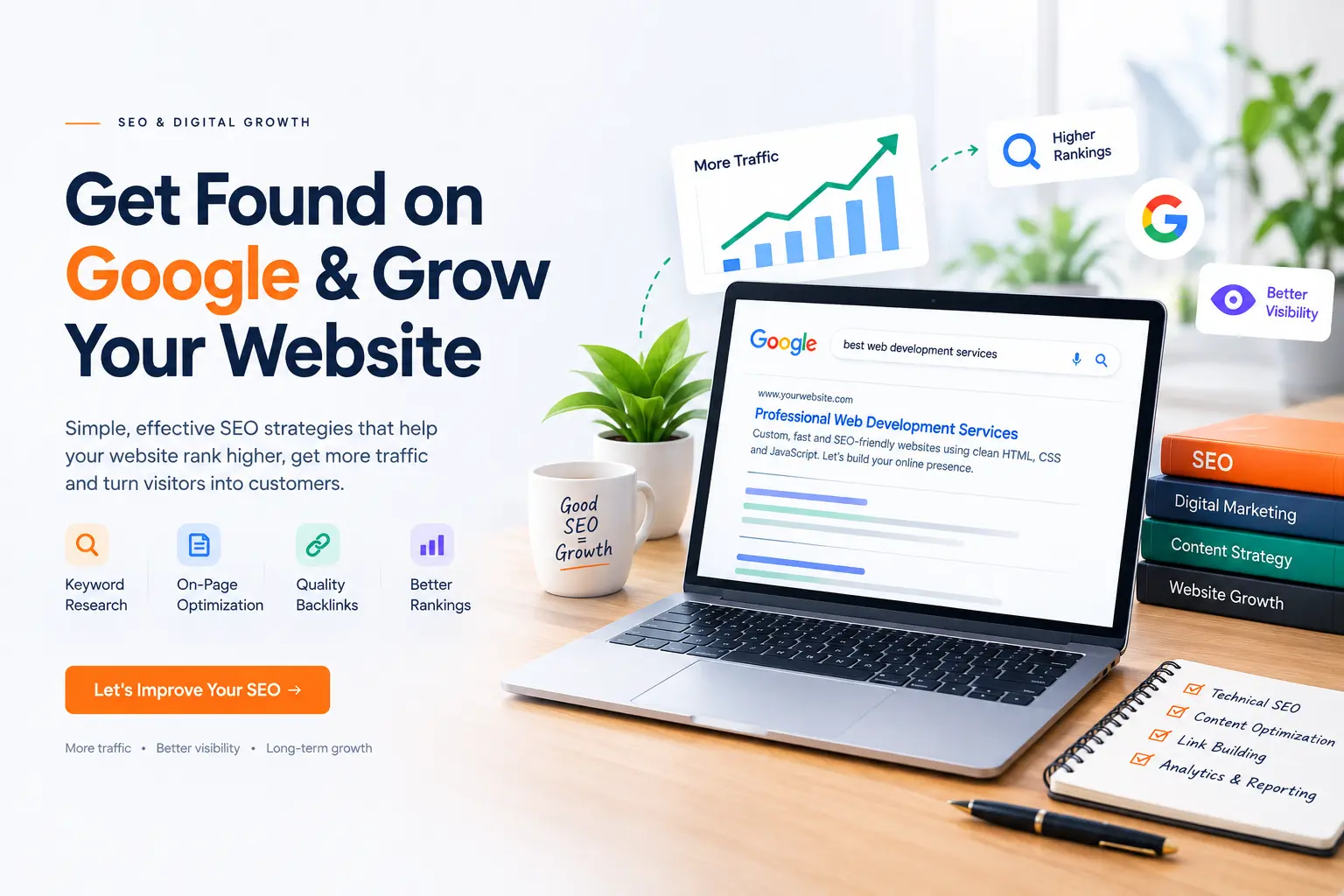
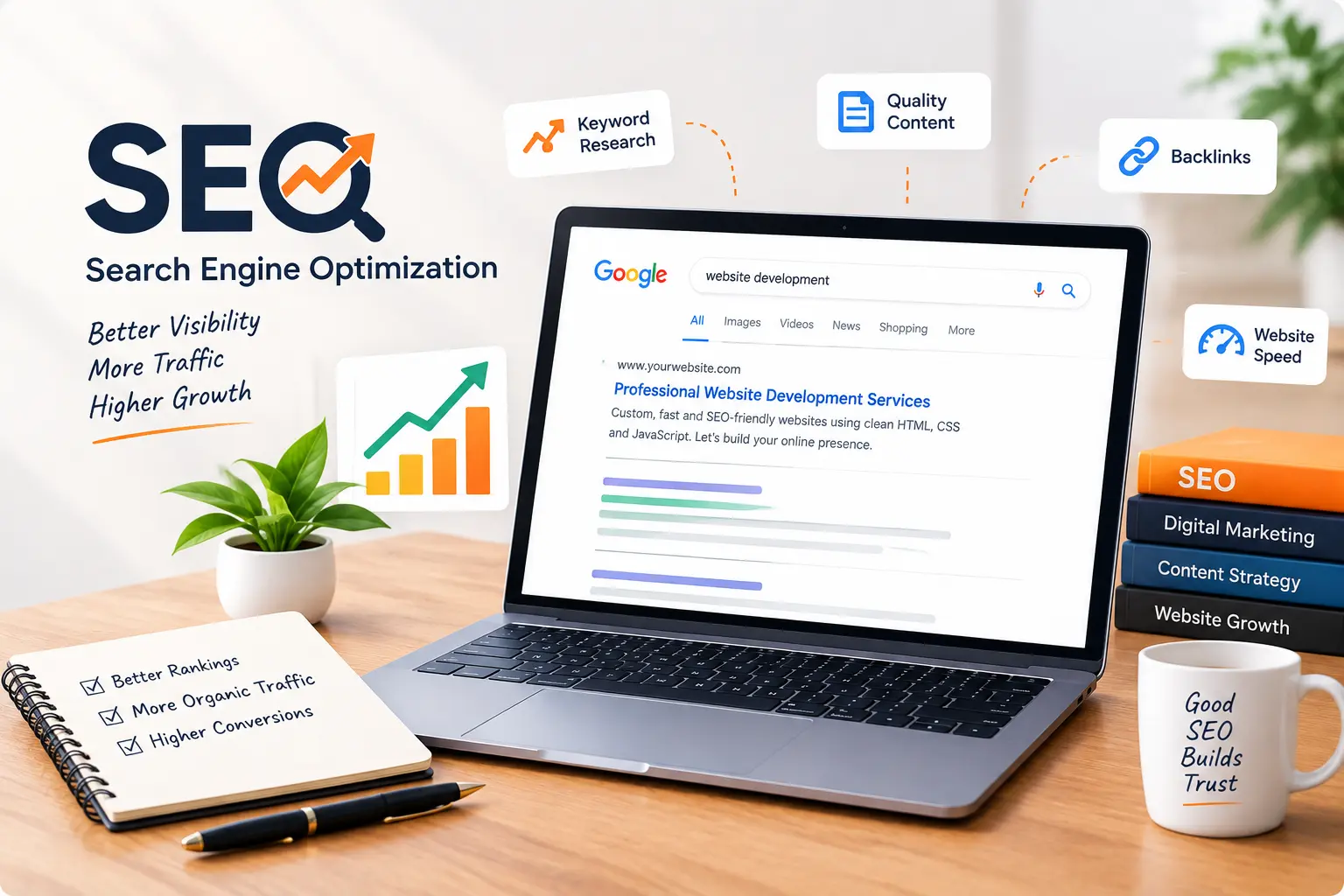
Most small business owners hear "SEO" and picture something complicated — link-building campaigns, keyword tools, monthly reports. But before any of that matters, your website needs the basics done right. These are the on-page fundamentals I check on every single project, whether it's a five-page business site or a full web app.
1. Write a unique title tag for every page
Each page needs its own title tag that describes exactly what's on it — not a generic "Home | Company Name" repeated everywhere. A good title includes your main keyword near the front and stays under about 60 characters so it doesn't get cut off in search results.
2. Don't skip the meta description
The meta description doesn't directly boost rankings, but it's the sentence people read before deciding to click your result over a competitor's. Write it like a short pitch: what the page offers and why it's worth a click.
3. Use one H1, then a logical heading structure
Every page should have exactly one H1 — usually your main headline — followed by H2s and H3s that break the content into sections a reader (and a search engine) can scan quickly. Skipping straight from H1 to H4 or wrapping every paragraph in a heading tag confuses both.
4. Add descriptive alt text to images
Alt text tells search engines — and screen readers — what an image actually shows. "Team meeting at Orbit Consulting office" is useful; "image1.jpg" is not. This also matters for accessibility, which is worth doing on its own merits.
5. Keep URLs short and readable
A URL like /services/website-development tells a visitor and a search engine exactly what to expect. Avoid long strings of numbers or parameters where a few plain words would do the job.
6. Link your pages to each other
Internal links — your service page linking to a relevant blog post, your homepage linking to your portfolio — help visitors find more of your content and help search engines understand how your site is structured. Don't be shy about linking where it's genuinely useful.
7. Make sure the site is fast and mobile-friendly
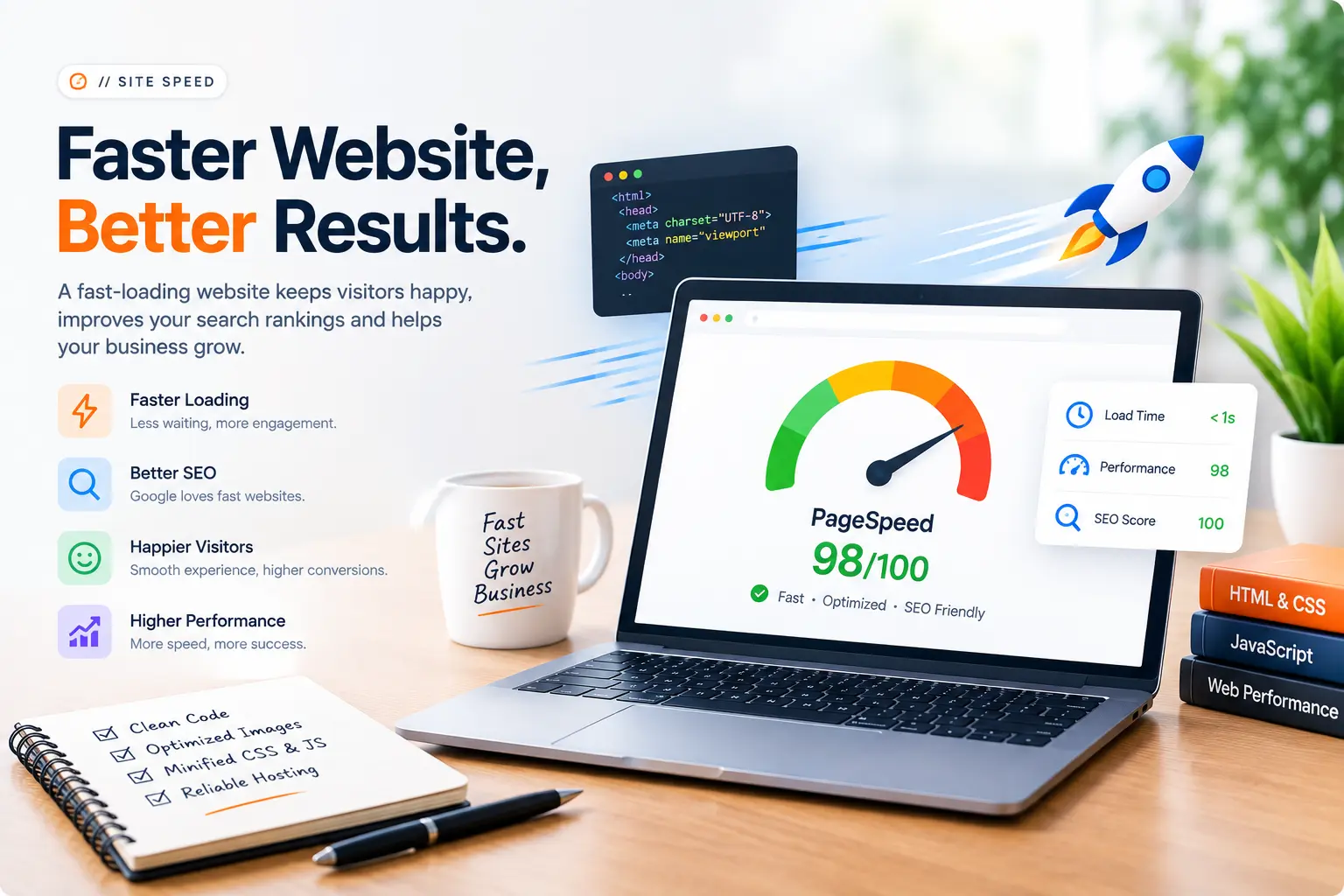
None of the above matters much if your site takes eight seconds to load on a phone. Compressed images, clean code without unnecessary plugins, and a mobile-first responsive layout are the baseline for both rankings and keeping visitors from leaving.
Getting the foundation right first
None of these seven basics require an ongoing SEO retainer or a big budget — they just require a website that's built correctly from the start. That's exactly how I approach every project at Hk Coder Lab: semantic HTML, proper meta tags and a clean structure baked in before the site ever goes live, not bolted on afterward.